
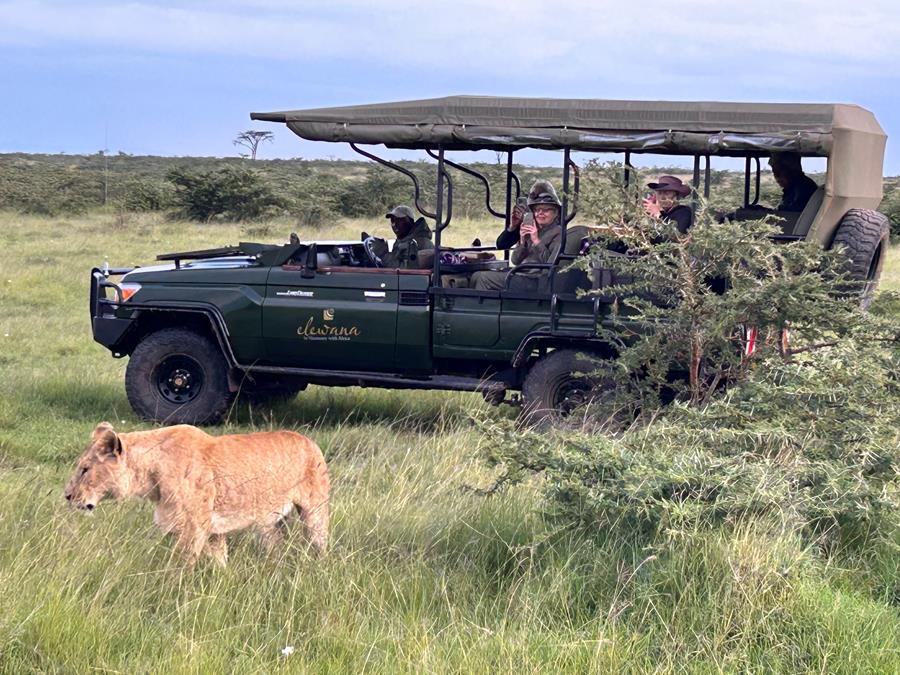
Few destinations deliver the classic safari fantasy quite like Kenya. Picture the sweeping savannahs of the Maasai Mara, the elephant herds of Amboseli framed by Mount Kilimanjaro, and the rhino sanctuaries of Laikipia make it the ideal first safari because it’s accessible, wildlife-rich, and home to some of the most refined luxury camps in Africa.
But first-time safari-goers almost always ask the same three questions: When should I go? What animals will I actually see? And will the Maasai Mara be crowded?
This guide answers all three, with the season-by-season detail you need to plan a luxury safari in Kenya that fits your travel style, whether that means front-row seats to the Great Migration or a quiet, exclusive escape during the green season.
1. Quick Answer: When Is the Best Time for a safari in Kenya?
Kenya has two dry seasons, and both are excellent for safari:
- July to October (long dry season): Peak season. The Great Migration fills the Maasai Mara, wildlife viewing is superb, and prices and crowds are at their highest.
- January to February/early March (short dry season): An underrated window with excellent game viewing, fewer visitors, and noticeably better value than the migration months.
Kenya’s rainy seasons, the long rains (April – May) and short rains (November – December), bring lush landscapes, newborn animals, and the year’s lowest rates, though some camps close and roads can be muddy.
Insider Tip: If your heart is set on the Great Migration, plan for late July through September. If you’d rather trade migration drama for tranquility, consider October, November, early December, or January through February.
2. Kenya’s Safari Seasons, Explained

July – October: Peak Season and the Great Migration
This is Kenya’s headline season. Picture dry weather, thinning vegetation, and the single greatest wildlife spectacle on Earth. Between July and October, more than 1.5 million wildebeest, along with hundreds of thousands of zebra and gazelle, move north from Tanzania’s Serengeti into the Maasai Mara in search of fresh grazing.
The famous Mara River crossings, involving herds braving strong currents and Nile crocodiles while big cats wait on the banks, are most likely from late July through September, with August offering the highest herd concentration and September providing a similar spectacle with slightly fewer tourists.
Wildlife you’ll see: enormous wildebeest and zebra herds, dramatic river crossings, lion prides at their most active, leopards and cheetahs drawn to the abundance of prey, resident elephants, buffalo, giraffe, hippos, and Nile crocodiles.
What to expect: The best game viewing of the year, of course with the highest prices and biggest crowds. Luxury camps near the river book out months in advance, and often require two- to three-night minimum stays. This is the window where where you stay matters most (more on that below).
January – February: The Connoisseur’s Season
An often-overlooked dry window that many safari insiders quietly prefer. The weather is hot and dry, the grass is short, and wildlife viewing is excellent, without the migration crowds or peak-season pricing.
Wildlife you’ll see: Resident big cats are the stars. The Mara’s resident lion, leopard, and cheetah populations are strong year-round, and January/February also falls within the wildebeest calving season in the Serengeti-Mara ecosystem, which draws predators and predator action. Elephants, giraffes, buffalo, and all of Kenya’s classic species are readily found.
What to expect: Fewer vehicles, lower rates, and a more relaxed pace. The trade-off is that the migration herds are largely in Tanzania at this time, so you won’t see river crossings.
June: The Insider’s Month
Early June, before the high-season crowds arrive and just as the landscape turns gold, is a rewarding time to be in the Mara. Rates haven’t hit their peak, and you may catch the first migration herds arriving in late June or early July.
October – November: Migration Without the Masses
Much of the wildebeest herd remains in the northern Serengeti and southern Mara through October, and they begin moving south in earnest as the short rains arrive in November. October to early November offers migration viewing with fewer minibuses, lower lodge rates, and a much quieter reserve. November’s “back-crossings” (herds crossing back and forth as localized rain showers shift) can be spectacular.
April – May (Long Rains) and November – December (Short Rains): The Green Season
Rain transforms the Mara into a brilliant green, newborn animals appear, and birdlife is at its most spectacular. Expect torrential afternoon downpours rather than all-day rain, muddy tracks, and some camp closures in April – May.
Read our First Time African Safari Planning Guide
3. The Maasai Mara Crowding Question – Answered Honestly
The Maasai Mara is one of the most famous wildlife reserves on Earth, and during peak season it can feel like it. Here’s the honest picture.
When Is the Mara Most Crowded?
July through September (especially August) is when the Mara is busiest, driven by the river crossings and Northern Hemisphere summer holidays. During peak crossing season, it’s genuinely possible to find dozens of vehicles gathered at a single active crossing point on the Mara River; wildlife reporters and conservation groups have documented well over 100 vehicles around a single crossing. Lion kills, leopards in trees, and cheetah sightings inside the main reserve can all draw crowds of vehicles in peak months.
Where the Crowds Are (and Aren’t)
Crowding in the Mara is highly localized. The congestion clusters around the Mara River crossing points and predator sightings near main access roads, not everywhere. Two important nuances to keep in mind:
- The Mara Triangle (the western sector, managed separately by the Mara Conservancy) actively enforces a limit of about five vehicles per sighting, keeping numbers down even in peak weeks.
- The private conservancies – Mara North, Naboisho, Olare Motorogi, Ol Kinyei, and others – are the calm. These are privately leased lands bordering the reserve where strict vehicle limits (typically three to five vehicles per sighting) are enforced and access is restricted to guests of partner camps. Wildlife moves freely between the reserve and conservancies, so you see the same animals, often with a sighting entirely to yourself.
The Luxury Solution: How to Do the Mara Right
For most luxury travelers, the answer isn’t avoiding the Mara in peak season – it’s where you base yourself:
- Stay in a private conservancy. You’ll enjoy capped vehicle numbers, off-road driving, night drives, walking safaris, and bush meals – none of which are permitted inside the main reserve. Conservancy-based camps offer the best balance of migration access and exclusive, uncrowded game viewing.
- Day-trip into the reserve for crossings. Many camps arrange a day excursion into the National Reserve during migration season – so you experience the epic drama of the river crossings and the serenity of conservancy life in one stay.
- Shift your dates slightly. Early June, September, October, and early November deliver outstanding wildlife with a fraction of the peak-season crowds.
- Book well ahead. Camp space is tightest from July to October. If you want a camp near a known crossing point, book well in advance – often 9–12 months out for top properties.
Ready to Start Planning Your Safari?
We help our clients design completely customized safari experiences – matching you with the right country, the right lodges, and the right pace for your trip.
Wondering what a sample itinerary might look like? Click here to see one option for a Kenya Private Safari with Amboseli National Park.

If you’re dreaming about a safari in Kenya, we’d love to help you bring it to life.
→Start planning your safari with us today
FAQ: Safari in Kenya
What is the best African country for a first safari?
Kenya, Tanzania, and South Africa are typically the best options due to their wildlife, infrastructure, and ease of travel.
How many days do you need for a safari in Kenya?
We recommend at least 7-10 days to fully enjoy the experience without feeling rushed.
Is an African safari safe?
Yes, when planned with reputable lodges and guides, safaris are very safe and well-managed.
When is the best time to go on a safari?
The dry season (typically May-October) is best for wildlife viewing, but each season offers something unique.
What animals will I see on my African safari?
Most first-time safari destinations offer the chance to see the “Big Five” (lion, leopard, elephant, rhino, and buffalo), along with giraffes, zebras, hippos, and countless bird species.
What is the Great Migration and when can I see it?
The Great Migration is the movement of millions of wildebeest and zebras across Kenya and Tanzania. It typically occurs year-round, but river crossings in Kenya’s Maasai Mara are most common from July to October.
Do I need vaccinations for an African safari?
Some destinations require or recommend vaccines such as yellow fever, along with malaria prevention in certain regions. Always consult your doctor or a travel clinic before your trip.
Can you go on safari with kids?
Yes! Many safari destinations and lodges are family-friendly, especially in Kenya. Some lodges have age restrictions, so planning is key. And know your child – there will likely be times given the animal encounters when you will be asked to sit very still and be very quiet.
What should I pack for my safari?
Neutral-colored clothing, comfortable layers, a good camera, binoculars, sunscreen, and insect repellent are essential. Most lodges provide detailed packing lists.
Are safaris physically demanding?
Not typically. Most safaris involve guided game drives in vehicles, though some lodges offer optional walking safaris or more active experiences.
What is the difference between a national park and a private game reserve?
National parks are open to the public and may have more vehicles, while private reserves offer more exclusive experiences, including off-road driving and fewer crowds.
Do I need a visa for an African safari?
Visa requirements vary by country and your nationality. Some countries offer visas on arrival, while others require advance applications.
What type of accommodations can I expect on safari?
Options range from luxury lodges with full amenities to tented camps that blend comfort with a more immersive, nature-focused experience.
How far in advance should I book a safari?
We recommend booking 9-12 months in advance, especially for peak travel seasons or bucket-list experiences like the Great Migration.
Will I have Wi-Fi on safari?
Many lodges offer Wi-Fi in common areas, but connectivity may be limited. This is part of the experience – disconnecting and being present in nature.
What is a typical day on safari like?
Most days include early morning and late afternoon game drives, with time in between to relax at your lodge, enjoy meals, or take in the scenery.
Is travel insurance recommended for a safari?
Yes! Comprehensive travel insurance is strongly recommended to cover trip interruptions, medical emergencies, and evacuation if needed.


Leave a Reply