
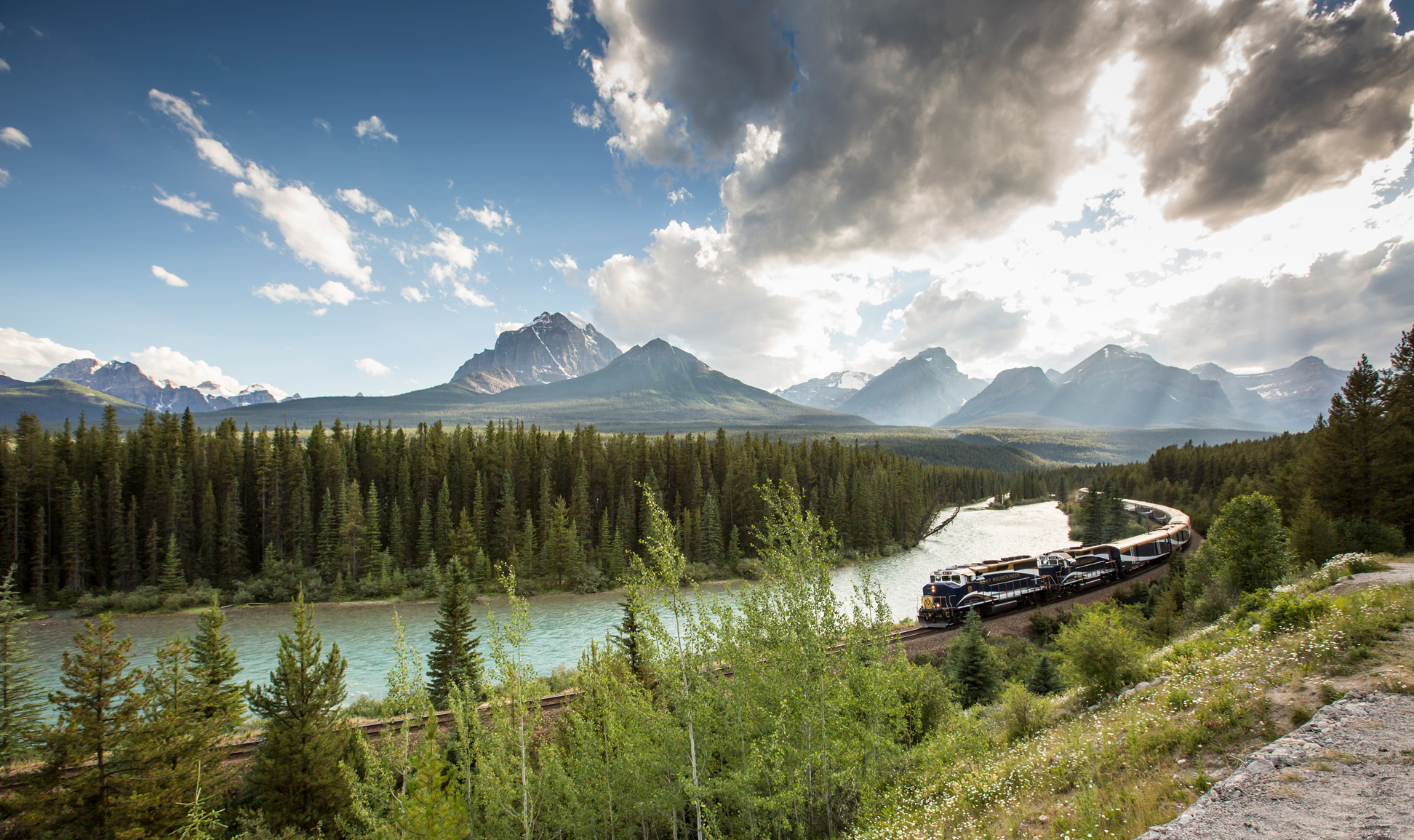
There’s Something Magical About Train Travel…
Picture this: You’re sipping your morning coffee as towering peaks roll past your window. No traffic. No airport chaos. Just wide-open landscapes, gentle motion, and the kind of slow travel that lets you actually experience a destination, not rush through it. Like river cruises pass through the heart of countries, train travel lets you truly see the land.
That’s the magic of a North American train trip.
Whether you’re dreaming of crossing the Canadian Rockies, winding along the Pacific Coast, heading north into Alaska, or taking a classic cross-country journey, train travel offers something rare: the journey becomes just as meaningful as the destination.
But if you’ve ever tried to plan one? You know it can feel overwhelming.
Routes, classes of service, sleeper cars, timing, logistics – it’s a lot.
This guide will walk you through exactly how to plan a North American train trip, step-by-step, so you can move from overwhelmed… to confidently planned… to counting down the days until departure.
Step 1: Decide What Kind of Train Experience You Want
Not all train trips are created equal. This is where many travelers get stuck.
Start by asking yourself: What do I want this trip to feel like?
1. Scenic & Relaxing
Think panoramic windows, breathtaking landscapes, and a slower pace.
Popular routes include:
- Rocky Mountaineer through the Canadian Rockies
- Amtrak California Zephyr across the Rockies and Sierra Nevada
- Amtrak Coast Starlight along the Pacific Coast
- Alaska Railroad from Seward to Fairbanks with Denali Park in between
2. Cross-Country Adventure
If your goal is the journey itself, long-haul rail is unforgettable.
- Amtrak Empire Builder
- Amtrak Southwest Chief
3. Luxury Train Travel
Looking for something elevated? Think curated itineraries, gourmet dining, and hotel-style service onboard.
- Rocky Mountaineer (GoldLeaf Service is a standout)
4. Short Scenic Getaways

Perfect for first-time train travelers or families.
- Day trips or 1–2 night journeys in regions like New England, the Pacific Northwest, the Southwest (see Rocky Mountaineer’s southwest offerings here), or the Canadian Rockies.
Pro Tip: Your experience will vary dramatically depending on your choice here—so this step sets the tone for everything else.
Step 2: Choose the Right Route
North America offers some of the most diverse train journeys in the world.
Here are a few standout options based on traveler goals:
Best for First-Time Train Travelers
- Amtrak Coast Starlight
- Rocky Mountaineer
Best for Bucket List Scenery
- Amtrak California Zephyr
- Rocky Mountaineer
- Alaska Railroad
Best for Fall Foliage
- Routes through the Northeast U.S. and Eastern Canada (September-October)
Best for Winter Magic
- Canadian Rockies routes (snow-covered landscapes feel straight out of a movie)
Best for Families
- Shorter, flexible routes with minimal overnight travel
Planning Insight: Unlike Europe, train routes in North America are less dense—so choosing the right route upfront is key to a smooth experience.
Read all about 7 Canadian train journeys here.
Step 3: Understand Classes of Service
Just like picking the right stateroom on a cruise, or room at a resort, an important part of North American train trip planning is choosing the right level of comfort. Below we outline the classes of service on the 2 most common train companies.
On Amtrak:
Coach Class
- Budget-friendly
- Spacious seats (more room than airplanes!)
- No private sleeping space
Business Class
- Extra legroom
- Priority boarding (on select routes)
Sleeper Cars (Roomette or Bedroom)
- Private accommodations
- Meals included
- Access to lounges and priority boarding
On Rocky Mountaineer:
SilverLeaf Service
- Large windows
- Gourmet meals served at your seat

GoldLeaf Service
- Bi-level glass dome cars
- Outdoor viewing platform
- Elevated dining experience
Pro Tip: If your journey includes overnight travel, upgrading to a sleeper is often worth it for comfort, privacy, and included meals.
Step 4: Pick the Best Time for your North American Train Trip
Timing can completely change your experience (and this also goes back to what you want to experience during the journey).
Spring (April–June)
- Blooming landscapes
- Fewer crowds
Summer (June–August)
- Peak season
- Best weather across most routes
Fall (September–October)
- Stunning foliage
- One of the most popular times for scenic routes
Winter (November–March)
- Snow-covered scenery
- Fewer travelers (and sometimes lower prices)

Important: Some luxury routes (like Rocky Mountaineer) are seasonal, typically running April through October. The Alaska railroad has modified routes available in the winter.
Step 5: Plan Your Stops & Itinerary
One of the best parts of a North American train trip (really, any train trip)? You don’t have to just go from Point A to Point B.
You can build a journey.
Popular stopover cities include:
- Montreal (get a little European flair here in North America)
- Chicago (a major rail hub)
- Denver (gateway to the Rockies)
- Vancouver
- Seattle
- Denali National Park
Sample Itinerary Ideas:
- Start in Chicago
- Take the California Zephyr to Denver
- Continue to San Francisco
- Add a few nights in each city
Planning Tip: Build in buffer time between connections—delays can happen.
Step 6: Budget for Your Trip
Train travel can range from budget-friendly to luxury-level. One of the benefits of working with us is that we can help you look at all your options and determine where to save and where to splurge.
Typical Cost Ranges:
- Coach: $100–$300 per segment
- Sleeper cabins: $500–$2,000+ depending on route and duration
- Luxury journeys: $1,500–$5,000+ per person
What Impacts Price:
- Route length
- Time of year
- Class of service
- Availability
Money-Saving Tip: Book early—especially for sleeper cabins and peak travel seasons.
Step 7: Know What to Pack
Packing for a train trip is different from flying. The good news is that you don’t have the same limits on what you can pack, but you do want to be mindful of what you will be carrying on and off the train.
Must-Haves:
- Comfortable clothing (layers!)
- Travel pillow & blanket
- Snacks and refillable water bottle
- Entertainment (books, downloads)
If You Have a Sleeper:
- Small overnight bag
- Toiletries
- Flip-flops or slippers
Pro Tip: You’ll have more space than a plane—but less than a hotel room. Pack smart.
Step 8: Understand Logistics (This Is Where Most People Get Stuck)
Here’s where planning gets tricky—and where working with a travel agent can make all the difference.
Things to Consider:
- Train schedules (often limited compared to flights)
- Potential delays
- Transfers and connections
- Hotel stays before/after segments
Common Mistakes to Avoid:
- Booking tight connections
- Underestimating travel time
- Choosing the wrong class for overnight trips
Step 9: Decide If You Want a DIY Trip or a Curated Experience
You can plan a train trip on your own—but many travelers prefer a curated approach.
DIY Planning
- Full flexibility
- Requires more research
Done-For-You Planning
- Custom itinerary
- Seamless connections
- Expert recommendations
This is where we come in.
Imagine Your Journey…
You board the train, settle into your seat, and watch the scenery begin to shift. Cities fade into countryside. Mountains rise in the distance. Conversations slow. Time stretches.
This is travel the way it’s meant to feel.
And the best part? You don’t have to figure it all out alone.
Ready to start planning your North American train adventure? Let us design a custom rail journey tailored to your travel style, timeline, and budget. Schedule a call today.
FAQs for North American Train Trips
What is the best train trip in North America?
It depends on your travel style, but the Rocky Mountaineer, Amtrak California Zephyr, and Alaska Railroad are consistently ranked among the most scenic.
How far in advance should I book a train trip?
For the best availability (especially sleeper cabins), book 3–6 months in advance, or earlier for peak seasons.
Are train trips in the U.S. and Canada worth it?
Yes! Especially for scenic routes. Train travel offers a unique perspective you simply can’t get from a plane or car.
Is Amtrak or Rocky Mountaineer better?
* Amtrak is more budget-friendly and flexible
* Rocky Mountaineer offers a luxury, curated experience
Do you sleep on overnight train trips?
Yes, if you book a sleeper cabin. Coach passengers sleep in their seats, but it’s less comfortable.
Are meals included on train trips?
* Included with sleeper cabins on Amtrak
* Included in all packages on Rocky Mountaineer
What is the most scenic train route in the U.S.?
The Amtrak California Zephyr is widely considered the most scenic in the lower 48 states. The Coastal Classic Train from Anchorage to Seward is often rated one of the most scenic in the world.
Is train travel good for families?
Yes! It’s spacious, relaxing, and allows kids to move around more than on planes.
Can you bring luggage on a train?
Yes. Train travel allows more generous luggage than airlines, but limits vary by route.
Do trains run on time in North America?
Delays can happen, especially on long-distance routes, so it’s important to plan buffer time.
What should I wear on a train trip?
Comfortable, layered clothing is best. Think casual, cozy, and adaptable.
Are there bathrooms and showers on trains?
* Bathrooms: Yes, on all trains
* Showers: Available in sleeper cars on long-distance routes
Is Wi-Fi available on trains?
Some trains offer Wi-Fi, but it can be unreliable – download entertainment in advance.
Can I customize a train trip itinerary?
Absolutely, and this is often the best way to create a seamless, memorable experience.
Is train travel eco-friendly?
Yes – train travel generally has a lower carbon footprint compared to flying.
What’s the difference between a Roomette and a Bedroom?
* Roomette: Compact, ideal for 1–2 travelers
* Bedroom: Larger, with more space and a private bathroom
Are train trips good for couples?
Incredible for couples—especially scenic or luxury routes with private accommodations.
What are the best destinations to pair with a train trip?
Cities like Montreal, Chicago, Denver, Vancouver, and Seattle are perfect additions. In Alaska, a night or 2 outside Denali National Park is highly recommended.
Do I need a passport for train travel?
Only if your route crosses between the U.S. and Canada.
Can a travel agent help plan a train trip?
Yes—and it can save you hours of research while ensuring a seamless, stress-free experience.




Leave a Reply